Booking choice: The small-group Anne Frank walk, from $21 per person. Check dates Tour details
German troops invaded the Netherlands on 10 May 1940. During the five years that followed, about 107,000 Jews were deported from the country, and only about 5,000 to 5,500 of them survived, according to the NIOD Institute for War, Holocaust and Genocide Studies. Anne Frank's family was one of many that went into hiding in Amsterdam.
This guide covers the main WWII places to visit today: the Dutch Resistance Museum, the National Holocaust Museum and the Names Memorial, the Stolpersteine, the National Monument on Dam Square, the February Strike, 4 May Remembrance Day and Kamp Westerbork, with prices, hours and how to fit them around the Anne Frank House.
The quick answer
Start with a guided walk through Anne Frank's neighbourhood and the Jewish Quarter, then choose a museum: the Dutch Resistance Museum (EUR 17.50 for adults, 2026, open daily 10:00 to 17:00) for daily life and resistance under occupation, or the National Holocaust Museum (EUR 20 online, 2026) for the persecution of Dutch Jews. Kamp Westerbork, the transit camp in Drenthe, is a full day trip from Amsterdam.
What WWII sites can you visit in Amsterdam?
The main ones are the Anne Frank House, the Dutch Resistance Museum, the National Holocaust Museum and Hollandsche Schouwburg, the Names Memorial, the National Monument on Dam Square and the Stolpersteine in the pavement.
Most of them sit in two clusters. Around the Westermarkt you have the Anne Frank House and the streets of the canal belt. In the east, the old Jewish Quarter and the Plantage hold the Holocaust museum, the Names Memorial and the Resistance Museum, a few hundred metres from each other. Dam Square lies between the two.
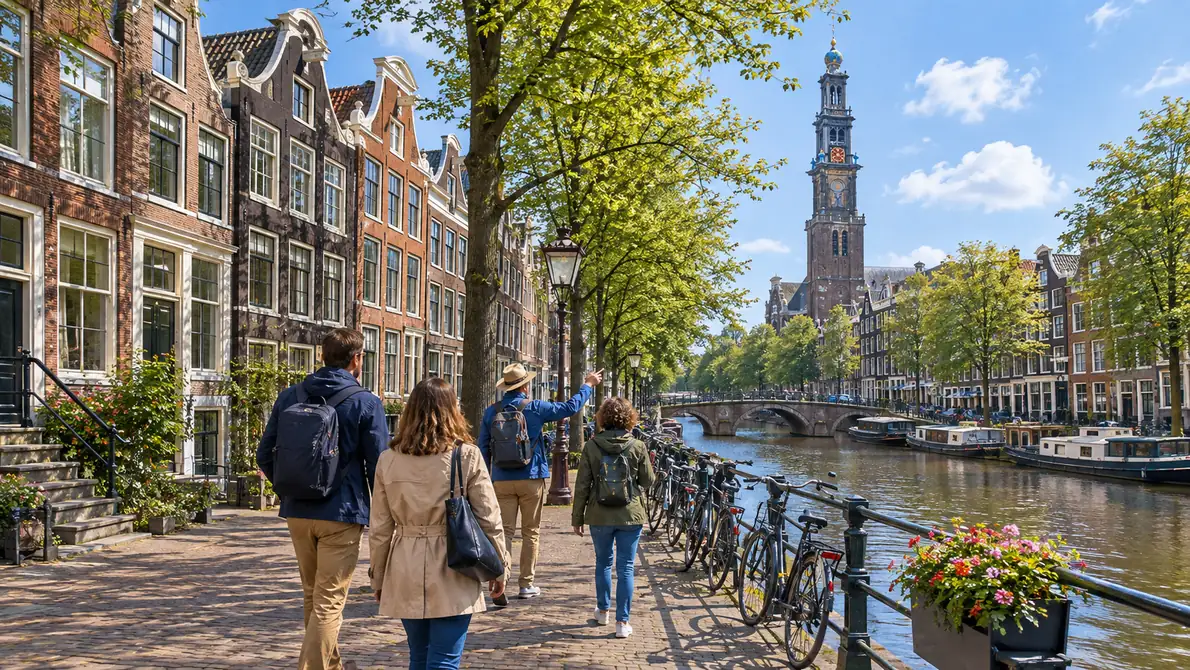
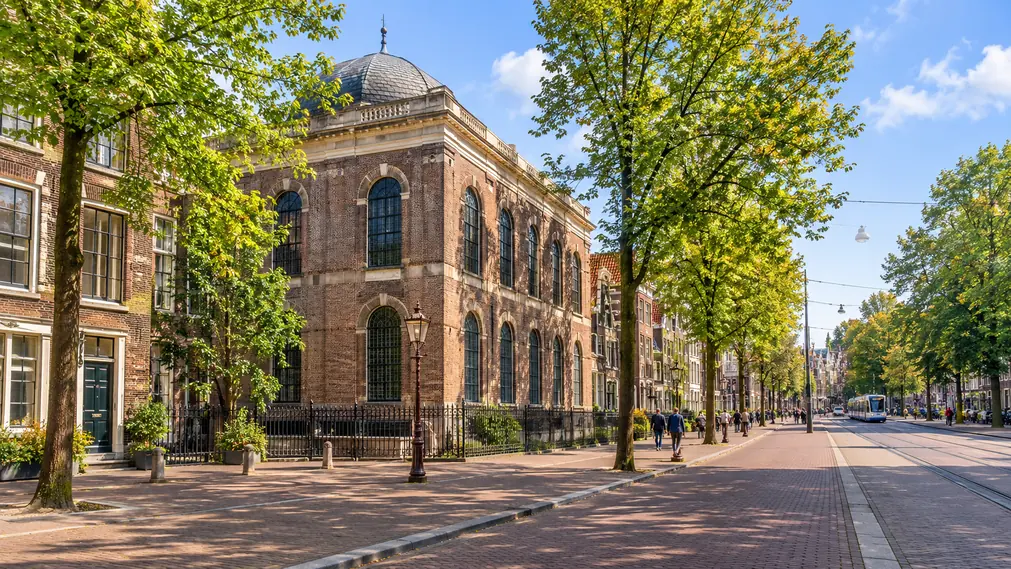
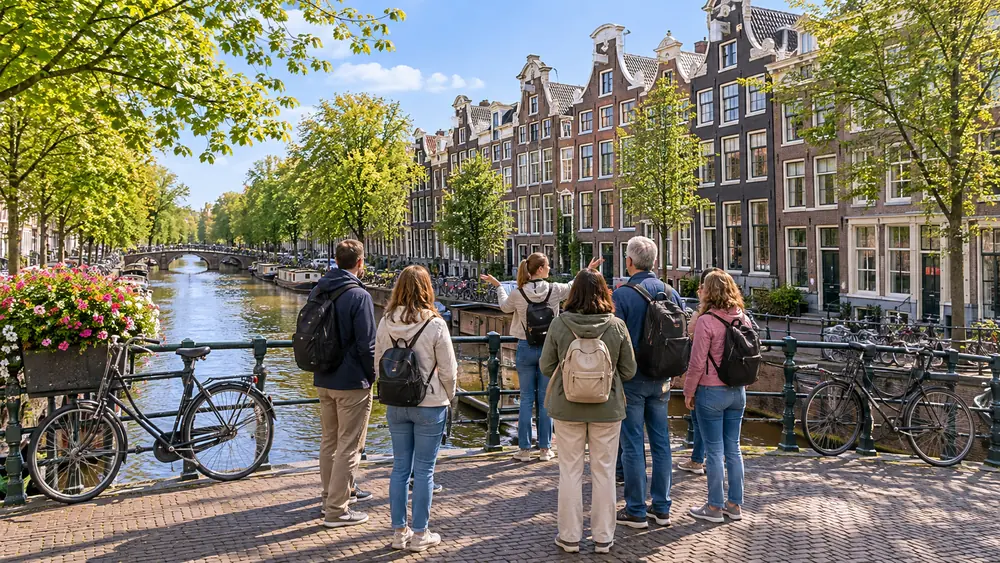
A walking tour is the easiest way to see how these places connect. The small-group Anne Frank walk follows the family's story, explains how the Dutch resistance worked and where people hid, and passes the Jewish Museum, the Auschwitz Monument and the facade of the Anne Frank House.
| Place | What it is | Entry (2026) |
|---|---|---|
| Anne Frank House | The Secret Annex and the diary | EUR 16.50, timed tickets on annefrank.org |
| Dutch Resistance Museum | Daily life and resistance under occupation | EUR 17.50 adults |
| National Holocaust Museum | The persecution of Jews in the Netherlands | EUR 20 adults online |
| Hollandsche Schouwburg | Memorial in the former theatre | Free |
| National Holocaust Names Memorial | About 102,000 names on bricks, Weesperstraat | Open-air memorial |
| National Monument, Dam Square | The national war memorial | Public square |
| Kamp Westerbork, Drenthe | Former transit camp and museum | EUR 13.50 ages 18 and over |
What is the Dutch Resistance Museum, and is it worth visiting?
The Verzetsmuseum, at Plantage Kerklaan 61, shows how people in the occupied Netherlands lived, adapted and resisted. It is open daily 10:00 to 17:00; adults pay EUR 17.50 in 2026.
The exhibition covers every form of resistance, from strikes, forged papers and underground newspapers to helping people go into hiding, escape routes and armed resistance. It also covers the former colonies: Indonesia, Suriname and the Dutch Caribbean. More than 130 personal stories carry it, and a free audio tour comes in Dutch, English, German, Spanish, Portuguese, Italian, French and Dutch Sign Language.
- Prices (2026): adults EUR 17.50, ages 7 to 17 EUR 9.50, family ticket EUR 40.00; free for children under 7 and with the Museumkaart or the I amsterdam City Card.
- Closed: 1 January, 27 April and 25 December.
- Getting there: tram 14 to Artis, or metro 51, 53 or 54 to Waterlooplein. The museum gives the walk from the Anne Frank House as 32 minutes.
- For families: Resistance Museum Junior, which the museum calls the country's first children's museum about the Second World War.
Until 7 February 2027 the temporary exhibition is "Hella de Jonge - Closer to Their Souls". Rod (Sep 2026) and his son "covered the museum in about 90 minutes", reading nearly everything, and Jane (Oct 2026), visiting with a 14-year-old, liked "how people faced difficult choices".
Entry to the Dutch Resistance Museum with the audio guide included: the occupation years through personal stories.
Explore the Dutch Resistance Museum ticket Tour detailsWhere can you learn about the Holocaust in Amsterdam?
At the National Holocaust Museum and the Hollandsche Schouwburg on the Plantage Middenlaan, at the National Holocaust Names Memorial on the Weesperstraat, and at the Anne Frank House.
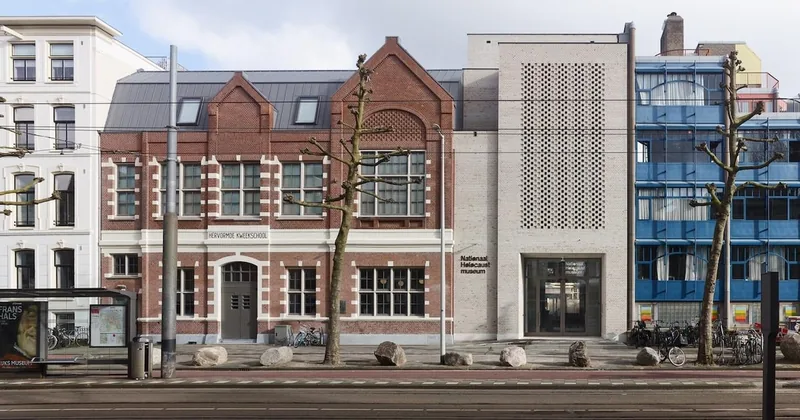
The National Holocaust Museum opened on 10 March 2024 and follows Dutch Jewish life from before the war through persecution, deportation and liberation to the way the country remembers it now. It opens daily 10:00 to 17:00 and is for visitors aged 10 and up. Opposite, the Hollandsche Schouwburg, a former theatre where Jews ordered to report for deportation were held from July 1942, is a free memorial.
A short walk away, the Names Memorial gives each of about 102,000 Jewish victims from the Netherlands their own brick, alongside 220 Roma and Sinti. Our Jewish Cultural Quarter guide has the hours, tickets and a plan for the day.
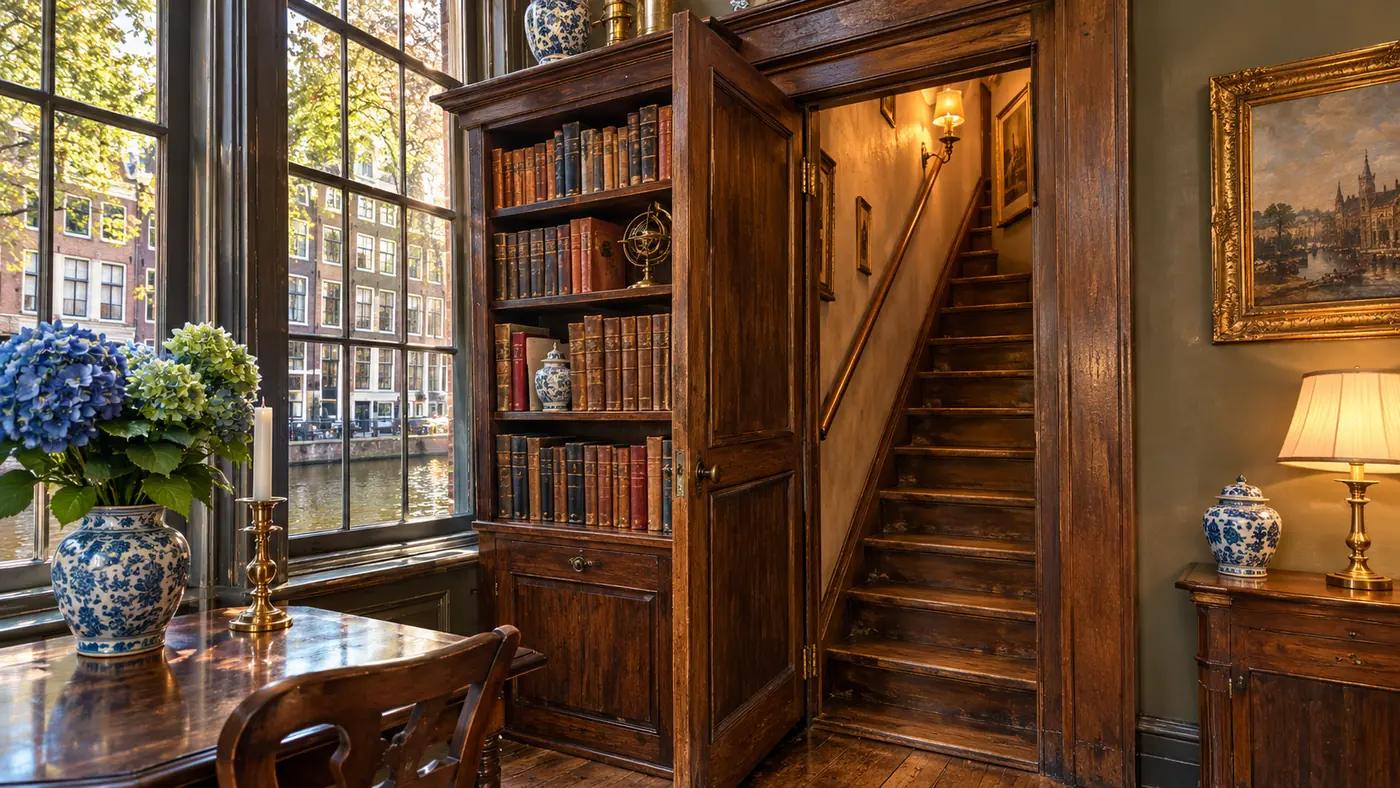
The Anne Frank House tells the same history through one family. Reserve its timed tickets on annefrank.org and pair the visit with a guided walk for the context: our Secret Annex guide covers the story itself.
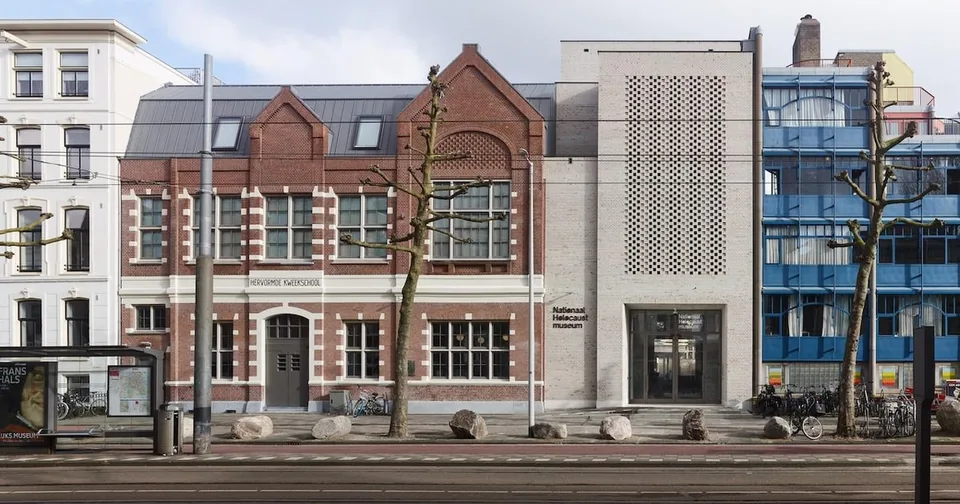
The National Holocaust Museum with the Hollandsche Schouwburg memorial on one day ticket.
Check dates for the National Holocaust Museum ticketWhat are the Stolpersteine, and where can you see them?
Small brass-plated stones set in the pavement in front of the last chosen address of a victim of the Nazis. Each one begins "Here lived" and names one person.
The artist Gunter Demnig started the project. In Amsterdam you find them in front of houses across the city, often in small groups for one family. Requests for new stones go to the Stichting Stolpersteine. The Jewish Cultural Quarter also runs the Digital Jewish Monument (Joods Monument), an online memorial where you can read about the people behind the names.
Four stones lie outside Merwedeplein 37, in the Rivierenbuurt, where the Frank family lived from 1933 (Anne joined them in February 1934) until July 1942. The flat belongs to the Anne Frank House but is not open to the public. A statue of Anne by Jet Schepp stands on the square.
Several walking tours stop at Stolpersteine on the way: the guided walk from the Westerkerk lists them among its memorial sites.
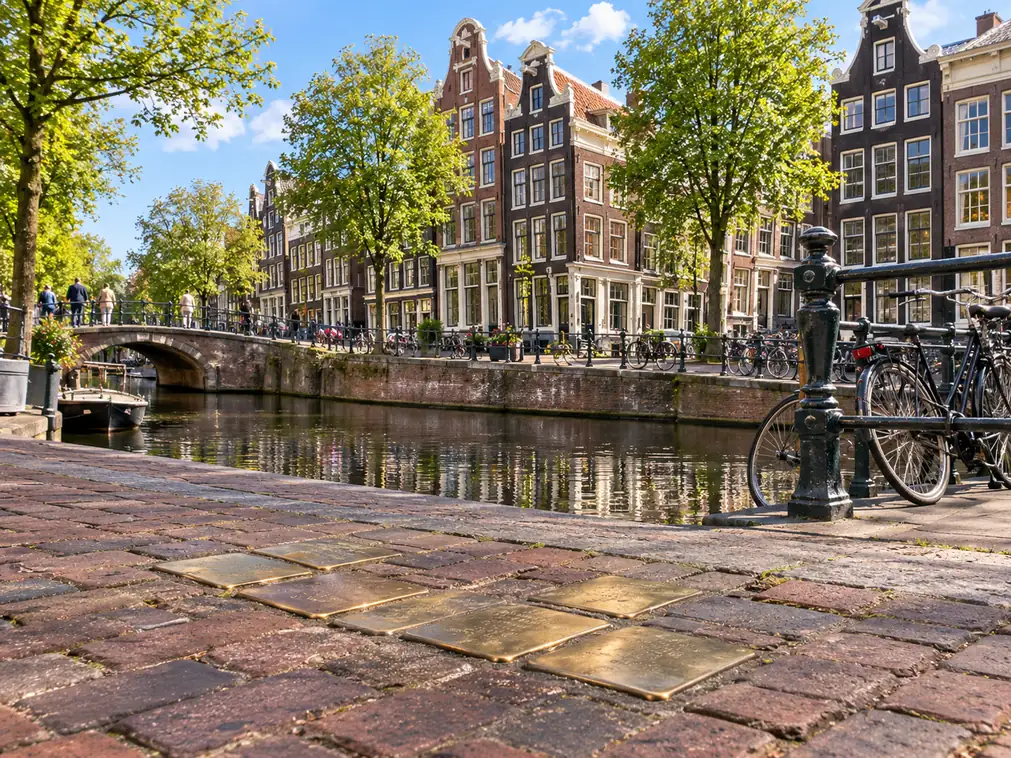
From the Anne Frank monument at the Westerkerk to the Jewish Quarter, past Stolpersteine and memorials, in your language.
Check dates for the guided walk from the WesterkerkWhat is the National Monument on Dam Square?
The country's national war memorial, a 22 m stone pillar unveiled by Queen Juliana on 4 May 1956. The national Remembrance ceremony takes place there every 4 May.
The architect J.J.P. Oud designed it; John Rädecker made the sculptures with his sons, and Paul Grégoire the reliefs. It remembers the victims of the Second World War and of later armed conflicts. In the wall behind the pillar are eleven urns with soil from execution sites and war cemeteries in the Dutch provinces, and a twelfth with soil from the former Dutch East Indies.
Dam Square is about a 10-minute walk from the Anne Frank House, and with the Westermarkt tram stop out of service until February 2028, it is where the trams from Central Station stop. Many walking tours pass it: the guided walk from the Westerkerk names the National Monument as one of its stops.
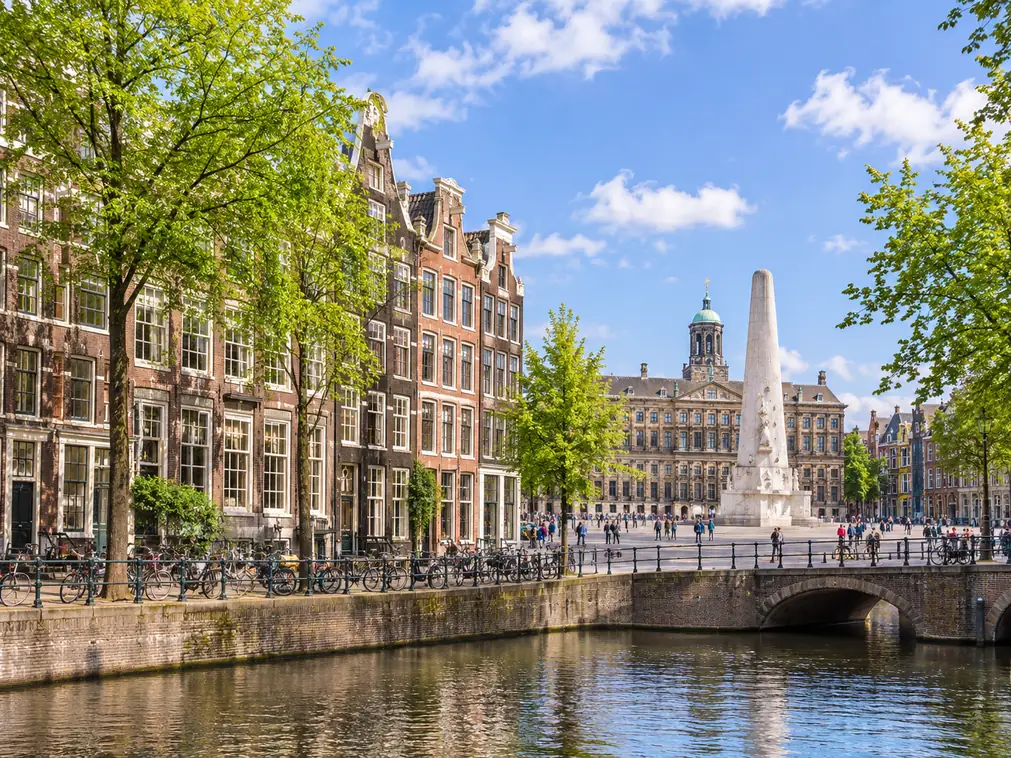
What happens on 4 May in Amsterdam?
National Remembrance Day. At 20:00 the whole country keeps two minutes of silence, and the national ceremony takes place at the monument on Dam Square.
The ceremony on the Dam is attended by the head of state and members of the government and parliament, and local ceremonies take place in nearly every town at the same time. Since 1961 the Netherlands has remembered the victims of later wars and peacekeeping missions as well as those of the Second World War.
- Shops close by 19:00.
- At 20:00 public transport and most road traffic stop, and most cafés and restaurants fall silent too.
- The next day, 5 May, is Liberation Day.
If you are in the city that evening, join the silence wherever you stand; nobody expects more of a visitor. In 2026 the Anne Frank House closed at 17:00 on 4 May; the 2027 hours are not published yet. Kamp Westerbork also holds a memorial service on its historic site every 4 May.
A specialist guide for Anne's story, the Jewish Quarter and Amsterdam under occupation, in one or two hours.
Check dates for the small-group Anne Frank walkWhat was the February Strike of 1941?
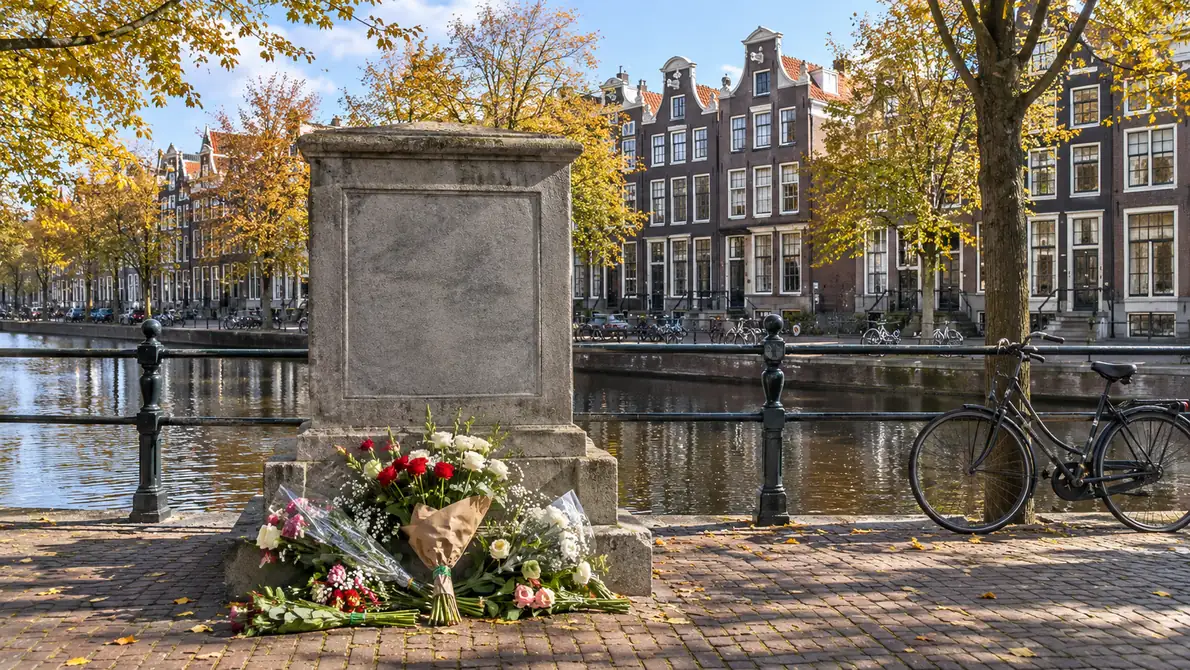
A mass strike in Amsterdam on 25 and 26 February 1941 against the first raids on Jewish men in the city. It is remembered every 25 February at the Dokwerker statue.
On 22 and 23 February 1941 the occupiers arrested 425 Jewish men in the old Jewish Quarter and took them away as hostages. The banned Communist Party spread a call to strike, discussed at a meeting on the Noordermarkt in the Jordaan. On the morning of 25 February the city's tram drivers stopped first, and other companies, services and schools followed. By 27 February most people were back at work.
The Dokwerker (the dock worker), a bronze by Mari Andriessen unveiled in December 1952, stands in the old Jewish Quarter, close to the Portuguese Synagogue. Andriessen also made the Anne Frank statue at the Westermarkt, where the guided walk from the Westerkerk begins. The Anne Frank and Jewish Quarter tour stops at the Dokwerker and tells the story of the strike and the Hunger Winter.
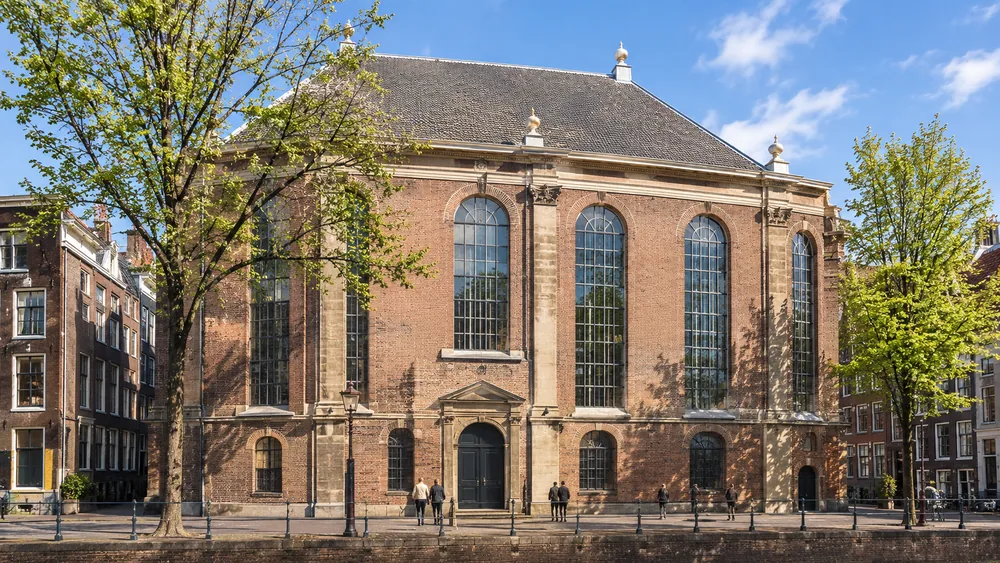
The February Strike, the Hunger Winter and the Jewish Quarter, with a local guide in two hours.
Explore the Anne Frank and Jewish Quarter tour Tour detailsHow do you visit Kamp Westerbork from Amsterdam?
Kamp Westerbork is in Drenthe, in the north-east of the Netherlands, a full day trip from Amsterdam. Take the train to Assen or Beilen, then a hub taxi or a bus to the museum at Hooghalen.
Westerbork began as a refugee camp; from spring 1942 the occupiers used it as a transit camp for Jews, and later also for Sinti and Roma. Between 15 July 1942 and 13 September 1944, 93 transports left the camp for the camps in the east. The eight people from the Secret Annex arrived there on 8 August 1944 and were sent to Auschwitz on 3 September 1944, on the last transport from Westerbork to Auschwitz.
The memorial centre is at Oosthalen 8, Hooghalen. The historic site is about 3 km away; a shuttle bus is included with admission, and private cars are not allowed there. On the site you see the National Monument Westerbork, a track of bent rails on 93 sleepers, one for each transport; the 102,000 stones on the former roll-call square; and a railway carriage where the names from the transport lists are read aloud every day.
- Hours: Monday to Friday 10:00 to 17:00; weekends and public holidays 11:00 to 17:00; closed 25 and 31 December, 1 January and the first three weeks after the Christmas holidays.
- Price (2026): EUR 13.50 for ages 18 and over, free under 6 and with the Museumkaart; debit card only.
- Getting there: train to Assen or Beilen (local trains only at Beilen), then the hub taxi, booked ahead, or a bus to Hooghalen and about 2 km on foot.
- Quieter: from 13:00 on weekdays between March and July, when school groups have gone.
Frequently asked questions
What is the best WWII museum in Amsterdam?
It depends on what you want to understand. The Dutch Resistance Museum shows daily life and resistance under occupation; the National Holocaust Museum covers the persecution of Dutch Jews; the Anne Frank House tells it through one family.
How much is the Dutch Resistance Museum?
EUR 17.50 for adults and EUR 9.50 for ages 7 to 17 in 2026, with a family ticket at EUR 40.00. Children under 7, Museumkaart and I amsterdam City Card holders go free. It opens daily from 10:00 to 17:00.
What happens in Amsterdam on 4 May?
National Remembrance Day: two minutes of silence across the country at 20:00 and the national ceremony at the National Monument on Dam Square. Shops close by 19:00.
Can you visit Kamp Westerbork as a day trip from Amsterdam?
Yes, by train to Assen or Beilen and then a hub taxi or bus to Hooghalen. Allow a full day. Entry costs EUR 13.50 for adults in 2026, shuttle to the historic site included.
Ready to book
Choose your tour
Free cancellation up to 24 hours before on every option. Prices are from-prices in USD and move with the season.
Anne Frank Small-Group Walking Tour
- Anne Frank specialist guide in your language
- One- or two-hour walking route
- Small group, or private on two hours
National Holocaust Museum Ticket
The persecution of Dutch Jews, two sites in one ticket